How to Optimise Your Google Business Profile for Better Map Rankings
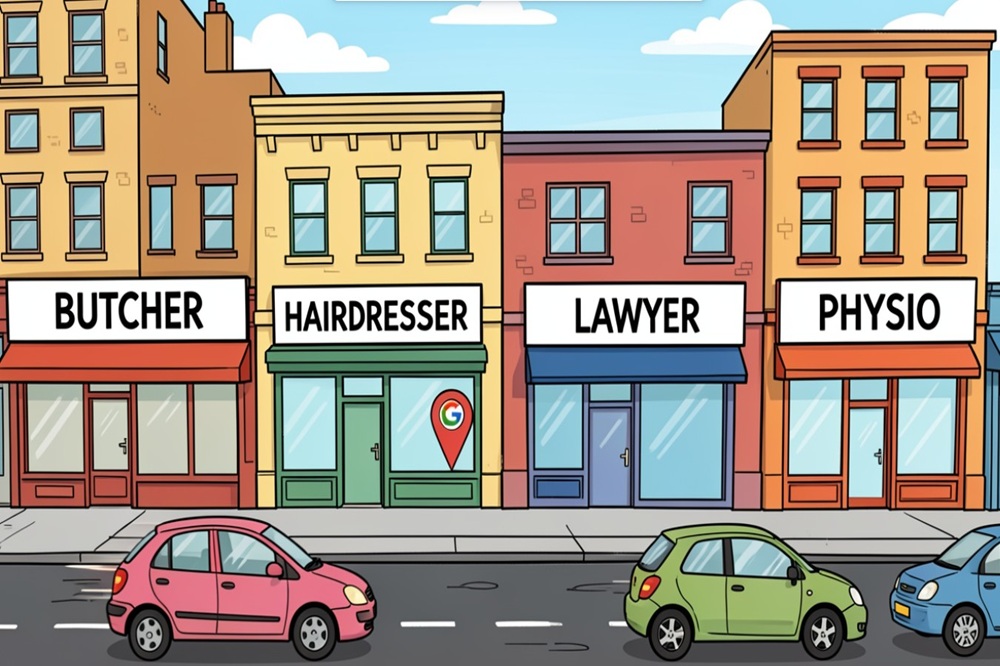
For a lot of local businesses, Google Business Profile does more to drive enquiries than the website itself. It’s the free listing controlling how a business shows up in Google Maps and in the map results that sit above the organic listings for any search with local intent, which for most service businesses is a big share of total search volume. Get it right and it becomes a steady source of calls and enquiries with almost no ongoing spend. Leave it half-finished and the business two suburbs over, the one with the average reviews and the stock photo cover image, ends up sitting in the map pack spot that should have been yours.
The platform used to be called Google My Business. Google rolled it into Google Business Profile in 2021, and the shift went beyond a new name, quite a bit of the mechanics changed too. Old GMB advice still floating around online often doesn’t hold up anymore.
A lot of listings get claimed, get a phone number added, and then sit there for years without another update. That’s the gap. The profiles climbing the map pack right now tend to be the ones someone keeps coming back to, not the ones finished once and forgotten.
Categories Decide Whether You Even Get Considered
This is the part most guides skip entirely, and it’s arguably the single biggest lever in the whole profile.
Every Google Business Profile has one primary category and space for several secondary ones. The primary category tells Google what you fundamentally are. A business listed under “Marketing Agency” gets treated differently in the map algorithm than one under “Internet Marketing Service”, even if the two businesses do near-identical work. Google is trying to match the searcher’s intent to a category, not to a business description, so this single field can determine whether you’re even in the running for a given search.
Choosing the right primary category
Search for your core service the way a customer would and look at who’s showing up in the Map Pack. Check what category those businesses are using (this is visible on their listing, under the business name). If three of the top four results are all “Marketing Agency” and yours is “Advertising Agency”, that’s worth fixing before anything else on this list.
Don’t guess at this. A mismatch between primary category and searcher intent is one of the more common reasons an otherwise well-optimised profile still doesn’t crack the top three map results.
Why secondary categories matter more than people think
Secondary categories widen the net. They’re how a business ends up appearing for adjacent searches beyond its primary category. An agency with “Marketing Agency” as primary and “SEO Agency”, “Web Design Company”, and “Digital Marketing Agency” as secondaries gets pulled into map results for all four searches, not just one. Leaving these blank is leaving visibility on the table for free.
There’s a limit to how far this can be stretched. Adding categories that only loosely relate to what you actually do risks a mismatch flag, and in the worst case, a suspension review. Relevance still matters. But most businesses under-use this field rather than over-use it.

NAP Consistency Is Still Doing More Work Than People Expect
NAP stands for Name, Address, Phone number. It’s the dullest item on this list, and also the one that quietly does the most damage when it’s wrong. Google checks these details against every other place your business appears online, and an old directory listing you forgot you ever claimed counts just as much as your own website footer.
A missing suite number is a common one. So is a business that quietly changed phone providers three years ago and never went back to update the old number sitting on a directory site. Individually these look trivial. Collected across a dozen citations, they start to look like conflicting signals about which business Google is actually dealing with.
The fix isn’t complicated, just tedious: pick the exact version of your name, address, and phone number you want everywhere, then go through your website, your GBP listing, and every directory or citation site you can find, and make them match precisely. Suite numbers included. Suburb spelling included. An SEO agency will likely have a tool to be able to find ALL your local directory listings, and perform an audit showing the contact details for each one.
The Description and Services Section Is Where the Keyword Work Happens
The business description gives you 750 characters to explain what the business does and who it’s for. That’s tight, so nothing in there should be wasted space. Skip the generic “we help businesses grow” framing and get specific: services offered, suburbs or region served, years in operation, anything that separates the business from a template competitor down the road.
This is also where Google picks up relevant terms and starts associating the profile with them, which feeds directly into how the listing surfaces for related searches. A vague description does nothing here. A specific one, mentioning the actual services and the actual area served, gives Google something concrete to match against.
Services and products sections
Most profiles leave the services section half-filled, if they touch it at all. Every individual service should get its own line with a short description, not a single bullet that just repeats the business name. The products section gets touched even less than that. It’s a free spot for listing actual service packages, each with its own keyword-rich copy, and almost nobody bothers.
Photos Aren’t Decoration, They’re a Ranking Signal
A profile with more photos gets more clicks. That’s not opinion, Google’s own guidance lists photo volume as a quality signal in its own right. Fifteen to twenty photos is a reasonable minimum for a service business: the office exterior, the team, examples of finished work, anything that proves the business is real and active.
Geotagging matters here too. Adding location metadata to photos before uploading ties them to the business address, which reinforces the same local relevance signals Google is already checking through NAP. It’s a small extra step that most businesses skip because nobody told them it existed.
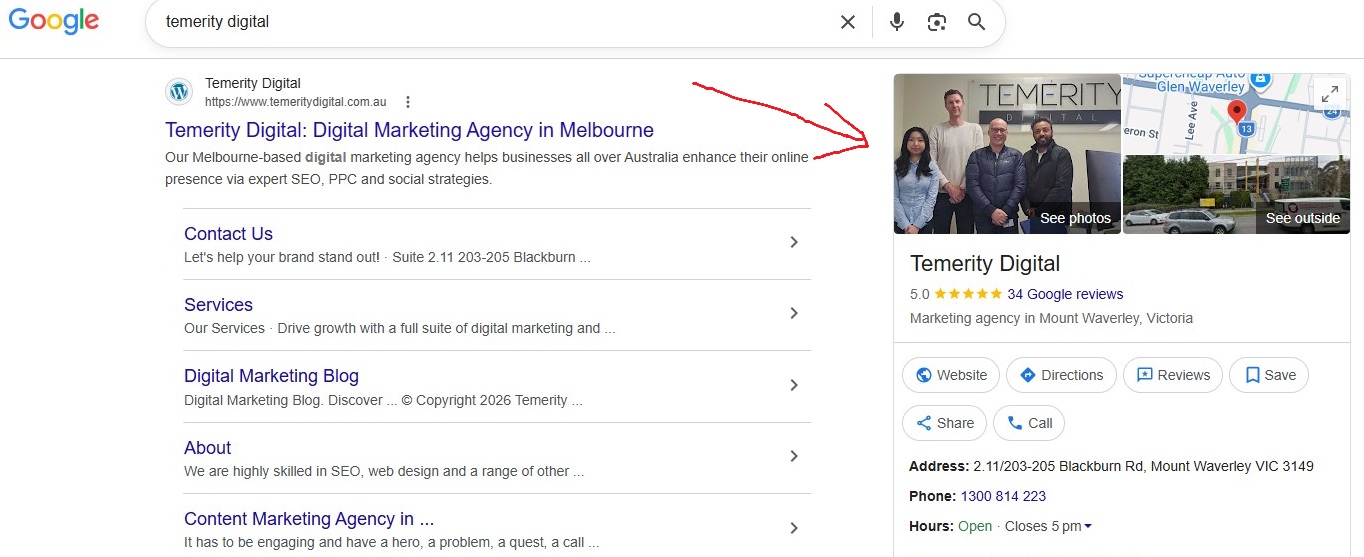
The cover photo specifically deserves its own thought. It’s the first image anyone sees, cropped to a 16:9 ratio, and a generic stock image undercuts the trust a good photo could be building. A clear shot of the actual team or office does more here than a polished but anonymous image ever will.

Reviews Still Move the Map Pack, and Response Rate Matters as Much as Volume
Review count and rating remain a heavily weighted local ranking factor, but the part that gets overlooked is response rate. A business that replies to every review, good or bad, signals active management. A profile with forty reviews and zero owner responses looks abandoned by comparison to one with fifteen reviews and a reply on each.
Handling the bad ones
A poor review is going to happen eventually to any business old enough to have a real history. Getting it removed is genuinely difficult and rarely succeeds unless it breaches Google’s policies outright. The better move is responding calmly and specifically, showing the concern is genuine rather than defensive. Everyone reading the review afterward is also reading the response.

Asking for reviews without incentivising them
Google prohibits incentivised reviews, but there’s nothing stopping a business from simply asking satisfied clients directly, especially long-term ones who’ve never been asked. A 22-year-old business with a thin review count relative to its history has an obvious, easy win sitting in its existing client list.
Posts: The Section That Sits Empty on Most Profiles
Google Business Profile has a Posts feature, essentially a small social feed sitting on the listing itself. Almost nobody touches it, so the businesses that do stand out by default. Two or three posts a month, pulled from actual blog content or real updates, is enough to make a profile look alive instead of abandoned.
Verification, Attributes, and the Maintenance Nobody Schedules
Verification has changed since the early GMB days. A postcard by mail used to be the only option, arriving inconsistently over five to ten days. Video and phone verification are now available for a lot of businesses, which speeds up the process considerably, though eligibility varies depending on category and location.
Attributes are a smaller but easy addition: online appointments, free consultations, accreditations, anything that applies and adds another filter a searcher might use. Trading hours need the same ongoing attention, updated whenever they change and set correctly for public holidays through special hours, because nothing erodes trust faster than a customer turning up to a business that’s closed when the listing said otherwise.
None of this is a one-time setup job. The profiles that hold their position in the Map Pack are the ones getting revisited every month, not the ones optimised once in 2021 and left alone since.
For help with Local SEO or a more comprehensive digital marketing strategy, contact Temerity Digital today.
Share this article
A quick overview of the topics covered in this article.
- Categories Decide Whether You Even Get Considered
- NAP Consistency Is Still Doing More Work Than People Expect
- The Description and Services Section Is Where the Keyword Work Happens
- Photos Aren’t Decoration, They’re a Ranking Signal
- Reviews Still Move the Map Pack, and Response Rate Matters as Much as Volume
- Posts: The Section That Sits Empty on Most Profiles
- Verification, Attributes, and the Maintenance Nobody Schedules
Latest articles

October 6, 2026

October 6, 2026