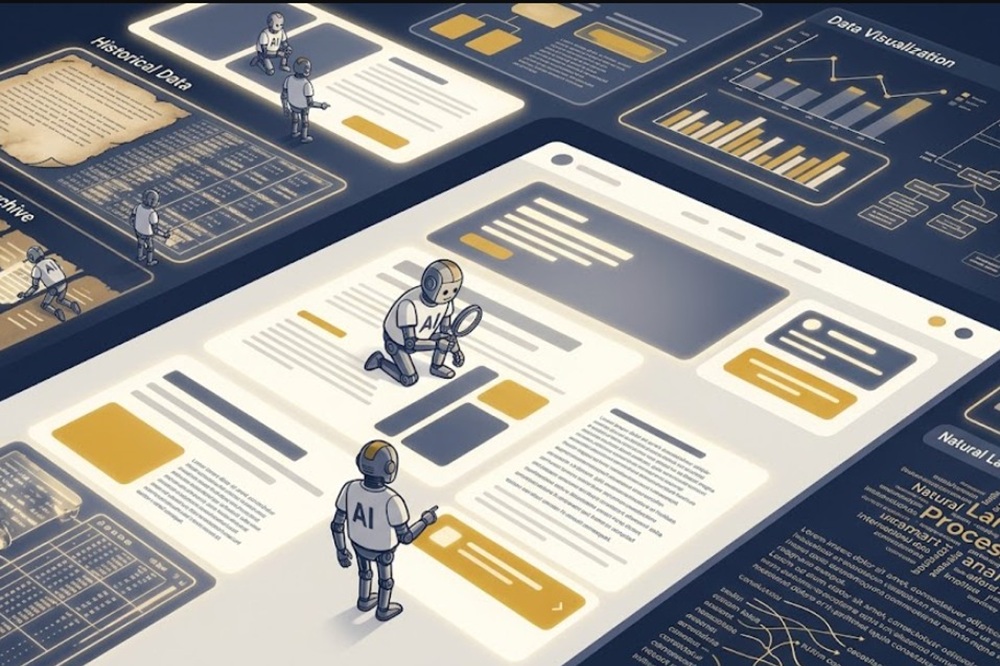
With search continually evolving and AI becoming a bigger part of this, focusing on content relevance rather than keywords is becoming crucial to a successful online presence. This shift is called Semantic Optimisation, and it’s how you make sure your website is seen and understood in this new digital world.
Key Takeaways
- Semantic Optimisation moves beyond just keywords to focus on the meaning and context of your content, making it easier for search engines and AI to understand.
- By improving how search engines understand your content, you can attract more relevant visitors who are genuinely interested in what you offer.
- AI plays a big role in this by powering smarter search engines that can process information contextually, not just by matching words.
- To implement Semantic Optimisation, you need to identify related topics and entities, and structure your content clearly for both people and machines.
- Embracing Semantic Optimisation is key to staying visible as AI becomes more integrated into how people search online.
What is Semantic Optimisation?
Gone are the days when simply stuffing keywords into your website was enough to rank well. Search engines, and increasingly, AI systems, have become far more sophisticated. They’re not just looking at individual words anymore; they’re trying to grasp the meaning behind your content. This is where semantic optimisation comes into play. It’s about structuring and presenting your information in a way that search engines and AI can truly understand the context, intent, and relationships between different concepts.
Understanding the Shift from Keywords to Concepts
Think of it like this: instead of just listing ingredients for a recipe, you’re explaining the entire cooking process, the cultural significance of the dish, and variations you can make. Semantic optimisation moves beyond simple keyword matching to a deeper exploration of topics. It involves identifying and using related terms, synonyms, and concepts that naturally occur when discussing a particular subject.
- Focus on User Intent: What is the person really looking for when they type something into a search bar?
- Contextual Relevance: How does your content fit into the broader conversation around a topic?
- Entity Recognition: Identifying specific people, places, organisations, and things mentioned in your content.
This shift means your content needs to be more comprehensive and naturally written. It’s about building topical authority, not just targeting a few keywords. Search engines want to provide the best possible answer to a user’s query, and that often means understanding the nuances of language and the relationships between different pieces of information.
The goal is to make your content so clear and contextually rich that an AI can easily understand its subject matter and its relevance to a user’s search, even if the exact keywords aren’t present.
Why Semantic Optimisation Matters for SEO
Moving beyond just stuffing keywords into your website copy is no longer a suggestion; it’s a necessity for anyone serious about their online presence. Semantic optimisation fundamentally changes how search engines, and increasingly, AI, interpret your content. It’s about demonstrating a genuine understanding of the topics you cover, not just the words you use.

Improving Search Engine Understanding of Your Content
Search engines are getting smarter. They’re not just looking for exact keyword matches anymore. They want to know if you truly grasp the subject matter. Semantic optimisation helps by connecting related concepts and entities within your content. Think of it like building a web of knowledge, where each piece of information links to others, creating a richer, more contextual picture for search algorithms.
- This contextual relevance is key to appearing in AI Overviews and featured snippets.
- It helps search engines understand the intent behind a user’s query, not just the literal words.
- By using semantically related terms and answering related questions, you signal to search engines that your content is a comprehensive resource.
Consider this: if someone searches for “best way to grow tomatoes,” a semantically optimised page wouldn’t just talk about “tomatoes.” It would also naturally include terms like “soil pH,” “sunlight requirements,” “watering schedules,” “fertiliser types,” and “pest control,” all within a logical flow. This shows a deeper grasp of the gardening topic.
Enhancing User Experience and Engagement
When your content is semantically rich, it naturally becomes more helpful and easier for people to read. You’re not just targeting search engines; you’re speaking directly to the user’s needs and questions. This leads to:
- Reduced bounce rates: Users find the information they’re looking for quickly and stay longer.
- Increased session duration: People explore more of your site because the content is engaging and relevant.
- Higher conversion rates: Visitors who find exactly what they need are more likely to take the next step, whether that’s signing up, making a purchase, or contacting you.
Focusing on user intent and providing thorough, contextually relevant answers makes your content more valuable. This naturally leads to better engagement metrics, which search engines then interpret as a positive signal about your content’s quality and authority.
By structuring your content logically, using clear headings, and linking related topics, you create a more pleasant experience for your visitors. This user-centric approach is precisely what semantic optimisation aims to achieve, aligning your content with both search engine algorithms and human readers. Leading SEO companies are embracing this evolution to help clients.
The Role of AI in Semantic Optimisation
Artificial intelligence (AI) isn’t just a buzzword anymore; it’s fundamentally reshaping how search engines understand and rank content. For us marketers, this means our approach to Search Engine Optimisation (SEO) needs to evolve too. AI is the engine driving the shift towards semantic search, moving us beyond simple keyword matching to a deeper appreciation of context and user intent.
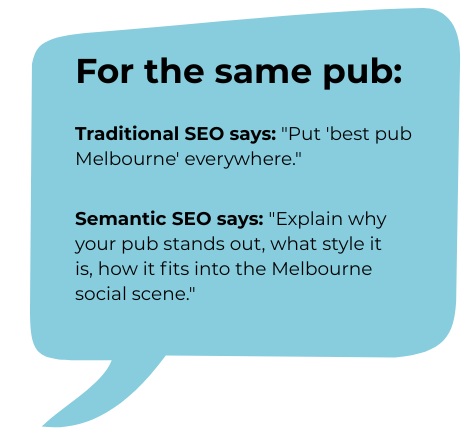
How AI Powers Semantic Search
Think about how you search for things. You probably don’t just type in a few isolated words. You use natural language, asking questions or describing what you need. AI, particularly through large language models (LLMs), is designed to process and understand this kind of natural language. It looks at the relationships between words, the context of your query, and even your past search behaviour to figure out what you really want. This is the core of semantic search.
AI algorithms are trained on vast amounts of text data, allowing them to grasp nuances, synonyms, and related concepts. This means that instead of just looking for an exact keyword match, AI-powered search engines can identify content that discusses a topic comprehensively, even if it doesn’t use the precise phrasing you searched for. This ability to understand meaning, not just words, is what makes AI so powerful for semantic search.
AI Tools for Semantic Analysis and Content Creation
Fortunately, you don’t need to be an AI expert to benefit. There are now numerous AI-powered tools that can assist with semantic optimisation. These tools can help you:
- Identify Semantic Relationships: They can analyse your content and suggest related terms, concepts, and entities that you might have missed. This helps build topical depth and authority.
- Analyse User Intent: Some tools can help you understand the underlying intent behind search queries, allowing you to tailor your content more effectively.
- Improve Content Structure: AI can assist in structuring your content in a way that makes it easier for search engines to parse and understand, potentially leading to better visibility in AI-driven features like AI Overviews.
- Generate Content Ideas: While not a replacement for human creativity and expertise, AI can help brainstorm topics and outline content that aligns with semantic principles.
When using AI for content creation, it’s vital to remember that it should complement, not replace, your own knowledge and experience. Always review and refine AI-generated content to ensure accuracy, originality, and adherence to your brand’s voice. Furthermore, citing sources and backing up claims with data, as AI tools can help identify, strengthens your content’s credibility and aligns with E-E-A-T principles.
Implementing Semantic Optimisation Strategies
Shifting your approach to semantic optimisation requires a deliberate strategy that moves beyond simple keyword stuffing. It’s about building a rich tapestry of interconnected information that search engines, particularly AI-driven ones, can easily understand and trust. This means focusing on the underlying meaning and context of your content, not just the words themselves.
Identifying Semantic Relationships and Entities
To truly connect with search engines and users on a deeper level, you need to identify the key concepts, people, places, and things – the entities – that your content discusses. Think about how these entities relate to each other. For instance, if you’re writing about sustainable farming, you’d want to identify entities like ‘organic fertilisers’, ‘crop rotation’, ‘soil health’, and ‘biodiversity’. Then, you’d explore the relationships: how crop rotation improves soil health, or how organic fertilisers support biodiversity.
- Map out your core topics and identify all related entities.
- Use tools to discover semantically related terms and concepts.
- Understand the user’s intent behind searching for these entities.
Consider this: if someone searches for “best way to grow tomatoes,” they’re not just looking for a list of steps. They might be interested in soil types, sunlight requirements, pest control, and even the best tomato varieties for their region. Addressing these related entities and their connections provides a more complete answer.
The goal is to create content that answers not just the explicit question, but also the implicit questions a user might have.
Structuring Content for Semantic Clarity
Once you’ve identified your entities and their relationships, you need to structure your content in a way that makes these connections obvious. This is where clear organisation and the use of specific formatting come into play.
- Use headings and subheadings logically. This creates a clear hierarchy, helping both readers and AI understand the flow of information. Think of it as building a mental map for your content.
- Incorporate structured data (Schema Markup). This is like providing a cheat sheet for search engines, explicitly telling them what your content is about and how different pieces relate. It’s incredibly effective for signalling entities and their properties.
- Build topic clusters. Instead of isolated blog posts, create interconnected groups of content. A central ‘pillar page’ can cover a broad topic, with ‘cluster content’ diving into specific sub-topics, all linking back to the pillar. This demonstrates topical authority.
- Answer ‘People Also Ask’ questions. Directly addressing common follow-up questions within your content naturally incorporates semantically related queries and shows a thorough grasp of the subject.
- Cite your sources. When you make factual claims, back them up with references to authoritative sites. This builds trust and signals credibility to search engines, which is increasingly important for AI-driven results.
By implementing these strategies, you’re not just optimising for keywords; you’re building a robust, semantically rich knowledge base that search engines can easily interpret and present to users, positioning your content for greater visibility in the evolving search landscape.
The Future of SEO: AI and Semantic Search
The way people search online is changing, and it’s happening fast. With AI now playing a massive role in how search engines understand queries, simply stuffing keywords into your content just won’t cut it anymore. We’re moving towards a future where search engines aim to grasp the meaning behind a search, not just the words used. This means your SEO strategy needs to adapt. Think about how you naturally ask questions or look for information – it’s usually in full sentences, like you’re talking to another person. AI is getting really good at understanding that kind of natural language.
So, what does this mean for your website? It means focusing on creating content that thoroughly answers a user’s question, providing context, and covering a topic from multiple angles. It’s about building topical authority and demonstrating a deep understanding of your subject matter.
Here’s what you should be thinking about:
- User Intent: What is the person really trying to find out when they type something into Google?
- Contextual Relevance: Does your content provide the background information needed to fully answer the query?
- Entity Recognition: Are you clearly defining the people, places, and things related to your topic?
- Natural Language: Is your content written in a way that sounds like a human conversation?
The future of SEO is about building relationships between concepts and providing clear, comprehensive answers that satisfy user intent. By optimising for semantic search, you’re not just preparing for AI-driven search results; you’re creating a better experience for your audience, which is always good for business. It’s less about chasing algorithms and more about genuinely helping people find the information they need.
Embracing the Future: Your Path Forward with AI and SEO
So, as we wrap up, remember that the rise of AI in search isn’t something to be worried about. Think of it more as a nudge to get smarter about how you present your content. By focusing on what people actually mean when they search – their intent – and structuring your information clearly, you’re setting yourself up for success. It’s about making your content easy for both people and AI to understand. Start by looking at what’s already working well for you, and then use tools to see how you can make it even better for this new era. The main goal hasn’t really changed: it’s still about connecting people with the right information, just through slightly different channels now. Don’t be afraid to explore how AI can help you do this even better.
Frequently Asked Questions
What exactly is semantic optimisation?
Think of semantic optimisation as teaching search engines to truly understand what your web pages are about, not just what words are on them. Instead of just stuffing keywords, you’re focusing on the meaning, context, and relationships between different ideas. This helps search engines like Google grasp the true intent behind a search query and connect users with the most relevant information, making your content more visible.
Why is semantic optimisation important for my website’s SEO?
Semantic optimisation is crucial for SEO because it helps search engines understand your content more deeply. When search engines grasp the context and meaning, they can better match your pages to user searches. This leads to improved rankings, more qualified website visitors, and a better overall experience for the person searching.
How does AI help with semantic optimisation?
AI plays a massive role by powering ‘semantic search’. AI can process vast amounts of information and understand natural language much like a human. This means AI can figure out the nuances of what someone is searching for, even if they don’t use exact keywords. AI tools can also help you analyse your content and identify ways to make it more understandable and relevant to search engines and users.
What are some practical ways to start doing semantic optimisation?
To implement semantic optimisation, you should start by identifying the main topics and concepts related to your content. Think about the entities (people, places, things) you’re discussing and how they relate to each other. Then, structure your content clearly using headings, subheadings, and bullet points. Writing in a natural, conversational tone that answers potential user questions also significantly helps.
How is AI changing the future of SEO?
The future of SEO is heavily influenced by AI and semantic search. As search engines become smarter, they’ll rely more on understanding context and meaning rather than just keywords. This means your content needs to be comprehensive, well-structured, and clearly explain concepts and their relationships. Optimising for AI visibility ensures your content gets found in new ways, like AI-generated answers.
What’s the best way to ensure my content is visible to AI search?
You should focus on creating content that offers genuine value and unique insights. Make sure your content is easy for AI to understand by using clear headings, organised information, and relevant terminology. Using structured data, like schema markup, also helps AI systems interpret your content correctly. It’s about being authoritative, clear, and making your information easily accessible.
Share this article
A quick overview of the topics covered in this article.
Latest articles

October 16, 2026

October 16, 2026