Our comprehensive 2026 SEO planning template
Planning your website’s search engine visibility for 2026 might seem like a big task. You must consider what users want, what competitors are doing, and how to ensure your site is technically sound. This guide offers a straightforward SEO planning template to help you get organised. It’s about making a clear plan so your efforts actually lead to results, not just random tasks. Let’s get your SEO sorted.
Important Points
- A good SEO planning template gives you a clear path for improving how easily people find your site and makes sure your SEO work matches what your business wants to achieve.
- Regularly checking how things are going and looking at what competitors are doing helps you find ways to do better and guides your future SEO plans.
- Always tweaking and watching your SEO results means your plan can keep up with changes, stay effective, and keep bringing people to your site.
- Understanding who you’re trying to reach and what they’re searching for is the first step to creating content that actually helps them.
- Making sure your website works well on all devices and loads quickly is just as important as the words on the page for search engines.
Understanding Your SEO Planning Template Foundation

Before you start mapping out keyword strategies or optimising meta descriptions, it’s vital to establish a solid foundation for your SEO efforts. This foundational phase is all about clarity – understanding precisely what you aim to achieve and who you’re trying to reach. Without this, your subsequent SEO activities might lack direction, leading to wasted resources and missed opportunities.
Note, this template has a tremendous deal of information. If you’re feeling overwhelmed, our team are experts in this area and would be happy to answer any questions or help you take action. Get in touch for an initial conversation.
Defining Your Core SEO Objectives
What does success look like for your business in the search engine landscape? It’s not enough to simply say ‘get more traffic.’ We need to be specific. Are you looking to increase brand awareness, drive qualified leads, boost online sales, or perhaps improve customer engagement? Clearly defining these objectives will shape every other decision you make in your SEO plan. Think about how SEO fits into your broader business goals. For instance, if your company’s main objective is to increase revenue by 15% this year, your SEO objectives should directly support that.
- Align SEO goals with overall business objectives.
- Establish specific, measurable SEO Key Performance Indicators (KPIs).
- Set realistic timeframes for achieving SEO milestones.
- Determine priority pages and sections for optimisation.
- Define the expected return on investment (ROI) for SEO efforts.
Setting clear, measurable goals is the first step towards a successful SEO strategy. It provides a benchmark against which all future efforts can be measured, ensuring accountability and focus.
Identifying Your Target Audience and Search Intent
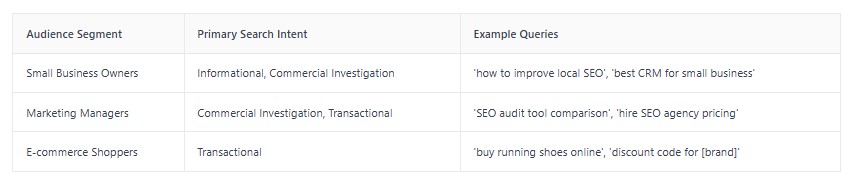
Who are you trying to connect with? Understanding your ideal customer – their demographics, interests, pain points, and online behaviour – is paramount. But it goes deeper than just knowing who they are; you need to understand why they are searching. This is where search intent comes in. Are they looking for information (informational intent), comparing options (commercial investigation), ready to buy (transactional intent), or trying to find a specific website (navigational intent)? Tailoring your content and optimisation efforts to match these intents is key to capturing valuable organic traffic.
Establishing Key Performance Indicators for Success
After defining your objectives, you require metrics to monitor your progress. These Key Performance Indicators (KPIs) are the quantifiable measures that tell you whether you’re on the right track. They should directly relate to your objectives. For example, if your objective is to increase qualified leads, a relevant KPI might be the number of form submissions from organic search traffic. It’s important to track a mix of metrics – some that show immediate impact (like keyword rankings) and others that reflect long-term business value (like conversion rates and revenue generated from organic searches).
- Organic Traffic Volume
- Keyword Rankings for Target Terms
- Conversion Rate from Organic Traffic
- Bounce Rate and Time on Page
- Number of Leads or Sales Generated via Organic Search
- Domain Authority / Page Authority (as a directional metric)
Conducting Comprehensive Keyword Research
This is where we get down to the nitty-gritty of what people are actually searching for. Without conducting thorough keyword research, your SEO efforts are essentially unreliable. We must comprehend the language utilised by your potential customers, the queries they pose, and the issues they aim to resolve. This isn’t just about finding popular terms; it’s about finding the right terms that align with your business goals and your audience’s needs.
Identifying Seed Keywords and Long-Tail Variations
It all starts with ‘seed’ keywords – broad terms that represent your core products or services. Think of these as the starting point. For instance, if you sell artisanal coffee, a seed keyword might be “coffee beans”. From there, we expand. We look for longer, more specific phrases, often called ‘long-tail’ keywords. These are usually more conversational and reflect a clearer intent. Examples include “organic single-origin coffee beans in Australia” or “best dark roast coffee beans for espresso.” These longer phrases tend to have less competition and attract users who know what they want.
- Brainstorm initial seed keywords based on your offerings.
- Use tools to expand these into related terms and questions.
- Look at what your customers are already asking in support tickets or reviews.
Analysing Keyword Difficulty and Commercial Intent
Once we have a list of potential keywords, we need to assess them. Keyword difficulty tells you how hard it will be to rank for a particular term. A high difficulty means many established sites are already competing for it. We also need to consider commercial intent. Does the searcher want to buy something, or are they just looking for information? Keywords with high commercial intent, like “buy running shoes online” or “the best accounting software for small businesses,” are often more valuable because they indicate a user is closer to making a purchase.
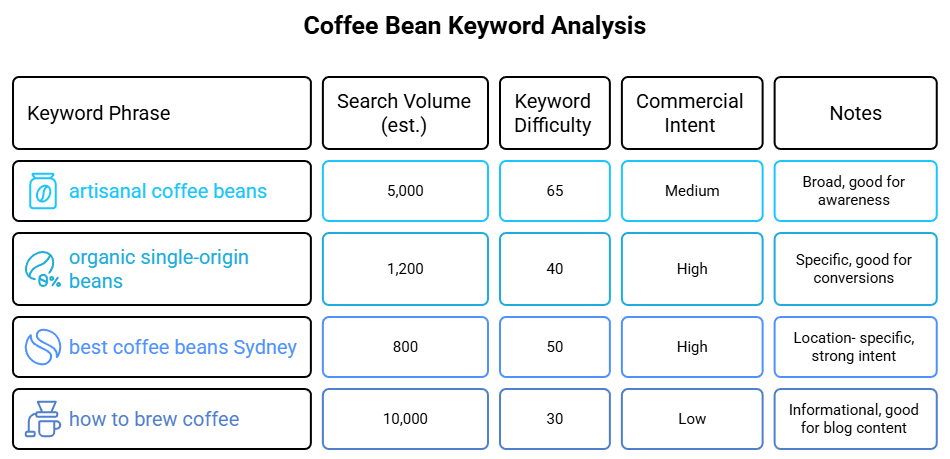
It’s tempting to chase keywords with the highest search volume, but this often leads to wasted effort. Prioritising keywords that align with your business objectives and have a clear path to conversion, even if they have lower volume, will yield better results.
Organising Keywords into Topic Clusters
Simply having a list of keywords isn’t enough. We need to group them logically. This is where topic clusters come in. A topic cluster is a group of related keywords that revolve around a central theme or ‘pillar’ topic. For example, our pillar topic might be “Coffee Brewing”. Supporting keywords could include “pour-over coffee technique”, “best coffee grinders”, “French press vs AeroPress”, and “how to clean a coffee maker”. By organising keywords this way, we can create content that comprehensively covers a subject, signalling to search engines that you are an authority on it. This structure also helps users find all the information they need in one place.
- Identify your main pillar topics.
- Group related long-tail keywords under each pillar.
- Map these clusters to specific pages or content pieces on your site.
Analysing Your Competitive Landscape
Understanding what your competitors are doing is a smart move when it comes to an optimal SEO strategy. It’s not about copying them but about seeing what works and where you can do better. This helps you find opportunities you might have missed.
Identifying Competitor Strengths and Weaknesses
Take a good look at the websites that show up when you search for your main keywords. What are they doing well? Do their articles provide a high level of detail? Do they have many helpful images or videos? Conversely, in what areas do they lack quality? Maybe their information is a bit out of date, or their website is tricky to use on a phone. Analysing the top SERPs and pinpointing these areas gives you a clear advantage.
- Content Depth: Are their articles lengthy and comprehensive, or concise and direct?
- User Experience: How easy is their website to navigate, especially on mobile?
- Freshness: Is their content up-to-date with current trends and information?
- Credibility: Do they back up their claims with data or real-world examples?
Discovering Untapped Keyword Opportunities
Your competitors might be ranking for keywords that you haven’t even thought of yet. By examining their top-performing pages, you can uncover these hidden opportunities. Tools can show you which keywords are sending them traffic. If a competitor has a page that gets many visitors for a specific term, and you don’t have content on that term, that’s a prime opportunity for you.
Analysing competitor content can reveal keywords that drive significant traffic, offering clear targets for new content creation. This process helps identify gaps where your competitors are succeeding, but your own site is not yet present.
Benchmarking Against Industry Leaders
It’s useful to see how you stack up against the best in your field. This isn’t just about rankings; it’s about understanding the overall strategy. Are they focusing on specific types of content, like guides or comparison articles? Do they use many videos? Knowing this information helps you set realistic goals and figure out what kind of content will perform best for your audience. It gives you a benchmark to aim for and improve upon.
Developing Your Content Strategy Framework
A well-defined content strategy is the backbone of any successful plan to improve your SEO. It’s not just about creating content; it’s about creating the right content, for the right people, at the right time. Without a clear framework, your efforts can feel scattered, leading to missed opportunities and wasted resources. This section guides you through building a strategic approach that aligns your content with your audience’s needs and your business objectives.
Mapping Content to the Customer Journey
Understanding where your audience is in their decision-making process is key. Content that appeals to someone just becoming aware of a problem will be very different from content aimed at someone ready to make a purchase. We need to align our content creation with these distinct stages.
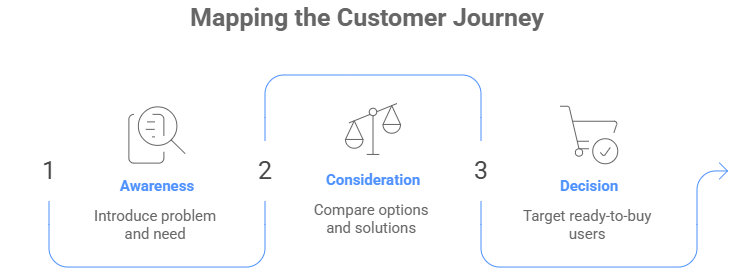
- Awareness Stage: Focus on broad topics that introduce a problem or need. Think informational articles, blog posts, and social media updates that answer common questions.
- Consideration Stage: Provide more in-depth information that helps users compare options. This is where guides, comparison articles, and case studies shine.
- Decision Stage: Target users who are ready to buy. Product pages, service descriptions, and testimonials are vital here.
Prioritising Pillar Content and Supporting Pieces
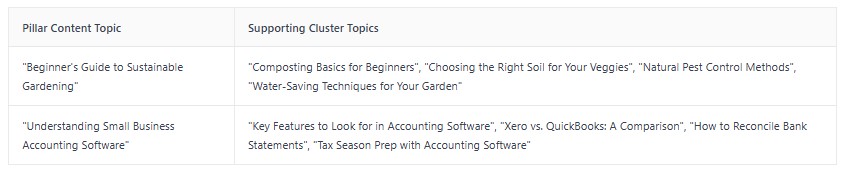
To establish topical authority and rank for a broad range of related searches, a pillar and cluster model is highly effective. This involves creating a comprehensive, long-form piece of content (the pillar) that covers a core topic in detail. Then, you create numerous shorter pieces (clusters) that delve into specific subtopics, all linking back to the main pillar page.
This structure helps search engines understand your depth of knowledge on a subject and improves user experience by providing clear pathways to related information.
Here’s a simplified view of how you might structure this:
Identifying and Addressing Content Gaps
Content gaps are those areas where your competitors are ranking for relevant keywords, but your website isn’t. Identifying these gaps is a gold mine for new content ideas and optimisation opportunities. It means there’s an audience searching for something you’re not yet providing adequate coverage for.
Regularly analysing your content against competitor performance and search trends will reveal where your audience’s needs aren’t being fully met. This analysis should inform both new content creation and the optimisation of existing pages to ensure you’re capturing all relevant search traffic.
To find these gaps, you can:
- Review competitor websites for topics they cover extensively.
- Use keyword research tools to find terms your competitors rank for but you don’t.
- Examine search engine results pages (SERPs) for common questions or related searches that you haven’t addressed.
Implementing Technical SEO Optimisations
Your website’s technical foundation is the bedrock upon which all your other SEO efforts are built. Without a site that search engines can easily crawl, understand, and index, even the most brilliant content strategy will struggle to gain traction. In 2026, this means paying close attention to how your site performs for both users and search engine bots.
Ensuring Site Speed and Mobile Experience
In today’s fast-paced digital world, users expect websites to load almost instantaneously. Slow loading times lead to frustration and higher bounce rates, directly impacting your search rankings. Google’s mobile-first indexing means your site’s performance on mobile devices is paramount. You need to ensure your site is not only fast but also provides a smooth, intuitive experience for users on any device.
Here are some key areas to focus on for speed and mobile optimisation:
- Image Optimisation: Compress images without sacrificing quality and use modern formats like WebP where possible.
- Code Minification: Reduce the file size of CSS, JavaScript, and HTML by removing unnecessary characters.
- Browser Caching: Allow browsers to store parts of your website so they load faster on subsequent visits.
- Server Response Time: Work with your hosting provider to minimise the time it takes for your servers to respond to requests.
- Mobile Responsiveness: Test your site rigorously using tools like Google’s Mobile-Friendly Test to identify and fix any usability issues on smaller screens.
Prioritising mobile experience isn’t just about passing a test; it’s about meeting your audience where they are and providing them with the best possible interaction with your brand.
Optimising Structured Data and Internal Linking
Structured data, often implemented using Schema.org markup, helps search engines understand the context of your content more effectively. This can lead to rich snippets in search results, improving click-through rates. Internal linking, on the other hand, is vital for distributing link equity throughout your site and guiding users and search engines to related content. A well-thought-out internal linking strategy creates a logical flow and demonstrates topical authority.
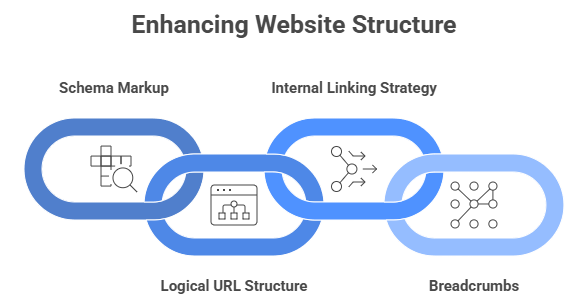
Consider these points for structured data and internal linking:
- Schema Markup: Implement relevant schema for products, reviews, events, articles, and more to enhance your SERP appearance.
- Logical URL Structure: Create clear, hierarchical URLs that are easy for users and search engines to understand.
- Internal Linking Strategy: Link relevant pages together using descriptive anchor text, particularly from pillar content to supporting pieces and vice versa.
- Breadcrumbs: Implement breadcrumb navigation to show users their location within your site structure and improve crawlability.
Addressing Core Web Vitals for User Experience
Core Web Vitals (CWV) are a set of metrics that Google uses to measure real-world user experience for loading performance, interactivity, and visual stability. Optimising these metrics is no longer optional; it’s a direct ranking factor.
Here’s a breakdown of the Core Web Vitals and how to approach them:
- Largest Contentful Paint (LCP): Measures loading performance. Aim for under 2.5 seconds. Focus on optimising server response time, rendering resource blocking, and resource loading.
- First Input Delay (FID): Measures interactivity. Aim for under 100 milliseconds. This characteristic is often improved by reducing JavaScript execution time and breaking up long tasks.
- Cumulative Layout Shift (CLS): Measures visual stability. Aim for under 0.1. This involves specifying dimensions for images and videos and avoiding dynamically injected content that pushes other elements around.
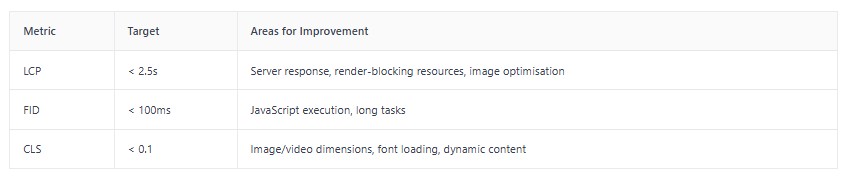
Regularly monitor your Core Web Vitals in Google Search Console and use tools like PageSpeed Insights to identify specific issues and track your progress. A technically sound website is a powerful asset in your 2026 SEO strategy.
Measuring, Scaling, and Iterating Your Strategy
You’ve worked diligently, developed your content, and refined the technical aspects of your website. That’s fantastic. But here’s the thing: SEO isn’t a ‘set it and forget it’ kind of deal. It’s more like tending a garden. You plant the seeds, water them, and then you’ve got to keep an eye on things, weed out what’s not working, and give the healthy plants a bit more sun. This phase involves ensuring that your efforts are yielding results and ensuring you are prepared to adjust as the search landscape changes.
Tracking Performance Against KPIs
This is where you see if all your planning and hard work is translating into tangible results. Have you established your Key Performance Indicators (KPIs)? Now it’s time to check if you’re hitting those targets. We’re talking about looking at your organic traffic growth – are more people finding you through search engines? Are they sticking around, or bouncing off faster than a kangaroo on a hot tin roof? Conversion rates are also a big one. Are those visitors engaging in the desired actions, such as subscribing to a newsletter or completing a purchase?
Here’s a summary of the key metrics to monitor:
- Organic Traffic: Sessions, users, and new users from search engines.
- Keyword Rankings: How your target keywords are performing over time.
- Conversion Rates: The percentage of organic visitors who complete a desired action.
- User Engagement: Metrics like average time on page and pages per session.
- Technical Health: Core Web Vitals scores and any site errors flagged by search engines.
Don’t get bogged down in every single data point. Focus on the metrics that directly tie back to your initial objectives. If your goal was to increase leads, then conversion rates from organic traffic should be a primary focus.

Applying Learnings for Continuous Improvement
Once you’ve got the data, it’s time to actually do something with it. Look at what’s working well. If a particular type of content is bringing in heaps of traffic and conversions, think about how you can create more of it. Maybe it’s a specific topic, a certain format, or a unique angle. Conversely, if something is underperforming, don’t simply ignore it. Figure out why. Is the content outdated? Does it match the search intent? Is there a technical issue holding it back? You might need to update it, reoptimise it, or even consolidate it with other content if you’re accidentally competing against yourself.
- Identify Top Performers: Analyse content and keywords driving the most valuable traffic and conversions.
- Address Underperformers: Investigate pages with declining traffic or low engagement.
- Content Refresh Schedule: Plan regular updates for existing content to keep it current and relevant.
- Keyword Cannibalisation Audit: Check for instances where multiple pages are competing for the same search terms.
Adapting to Evolving Search Behaviours
Search engines and user behaviours are constantly changing. What worked last year might not be as effective today. Think about new features in search results, shifts in how people phrase their queries, or emerging topics in your industry. You need to stay agile. This requires you to regularly review your strategy, remain open to testing new approaches, and stay informed about algorithm updates. The most successful SEO strategies are those that are flexible and responsive to change. It’s about building a robust foundation but also being ready to pivot when necessary to maintain and grow your search visibility.
- Monitor industry trends and competitor activities.
- Experience new content formats and optimisation tactics.
- Stay informed about major search engine algorithm updates.
- Regularly reassess your target audience and their evolving search intent.
Putting Your Plan into Action
So, you’ve got the template, and you’ve mapped out your strategy for 2026. That’s a big step, honestly. It’s easy to get lost in all the details, but remember, this plan is your guide. It’s not set in stone, but it gives you a clear direction. Implement these steps, monitor your progress, and don’t hesitate to make adjustments as you gain knowledge.
You’ve likely noticed there’s a lot involved. So if you need help planning your strategy and implementing it, we’d love to chat about how we can help. Get in touch with our team, and let’s have a conversation!
Frequently Asked Questions
What are the benefits of using an SEO planning template?
Using an SEO planning template is like having a map for your website’s journey online. It helps you figure out exactly where you want to go (your goals) and the best way to get there, making sure your efforts are focused and effective. It stops you from just guessing and helps you save heaps of time and effort.
What are the first things you need to sort out for your SEO plan?
Before anything else, you need to be clear on what you want to achieve with SEO – like getting more people to visit your site or buy your stuff. Then, you’ve got to understand who you’re trying to reach and what they’re actually searching for. Finally, decide how you’ll measure if you’re winning, like tracking website visits or how high you rank for certain words.
How do you find the right search words (keywords) to target?
You start with broad ideas related to your business, then dig deeper for more specific phrases people actually type into search engines. It’s important to understand how difficult it is to rank for these keywords and whether people searching for them are likely to make a purchase. Grouping similar keywords together helps you organise your content.
Could you please explain the importance of analysing your competitors’ strategies?
Checking out your competitors helps you see what they’re doing well and where they’re falling short. This can give you ideas for keywords they might be missing or content they haven’t created yet, giving you a chance to get ahead.
How do you make sure your website works well technically for search engines?
This means making sure your website loads super fast, works perfectly on phones, and is easy for search engines to understand. Things like having a good site structure, using clear links between your pages, and making sure your site meets ‘Core Web Vitals’ are key.
Once you’ve got a plan, what’s next?
You must monitor the effectiveness of your plan by examining your key performance indicators. Learn from what works and what doesn’t, and be ready to adjust your strategy as search engines and user preferences change over time. It’s all about continuous improvement!
Share this article
A quick overview of the topics covered in this article.
Latest articles

October 11, 2026

October 11, 2026